
Winter in the Hudson Valley forces windows shut and seals doors tight to lock out freezing drafts. While tight construction keeps drafts out and heating bills steady, sealing off outdoor air circulation creates a confined environment where everyday dust, pet dander, and cooking fumes linger. Reviewing practical indoor air quality tips for closed-up winter homes helps homeowners protect family health and breathe easier throughout the coldest months of the year. When winter sets in, heating equipment runs frequently and circulates existing indoor air without natural dilution from open windows. This guide breaks down effective steps you can take today, covering home humidity control, air ventilation, and targeted system upkeep.
Managing Moisture and Balanced Winter Humidity
Heating systems cycle continuously through the winter, often stripping moisture from the air and leaving living spaces feeling dry. This low humidity dries out nasal passages and throat membranes, which reduces natural resistance to seasonal airborne bugs.
Targeting the Ideal Winter Range
Established indoor air quality guidelines recommend maintaining a balanced moisture level inside the home during colder weather. A simple hygrometer placed on a main-floor counter provides a reliable reading of indoor moisture levels. When indoor air becomes uncomfortably dry, installing an evaporative or steam humidifier adds steady moisture to the living space. When excessive moisture collects on cold glass or in damp basements, running a dedicated dehumidifier helps prevent condensation and reduces conditions that favor dust mites and mold.
Everyday Moisture Control Practices
Routine activities like showering, boiling water, and drying clothes contribute moisture that needs proper management. Run bathroom exhaust fans after bathing until steam clears to vent damp air outdoors before it settles into wallboards. In the kitchen, run the range hood fan while simmering stews or boiling water so excess moisture exits through dedicated venting instead of accumulating in common living areas.
Upgrading Filtration and Air Circulation
A tightly sealed winter home relies entirely on your HVAC blower to keep air circulating across living spaces. When filters sit clogged with debris, trapped particles recirculate through ductwork into bedrooms and common spaces.
Keeping Up with Filter Changes
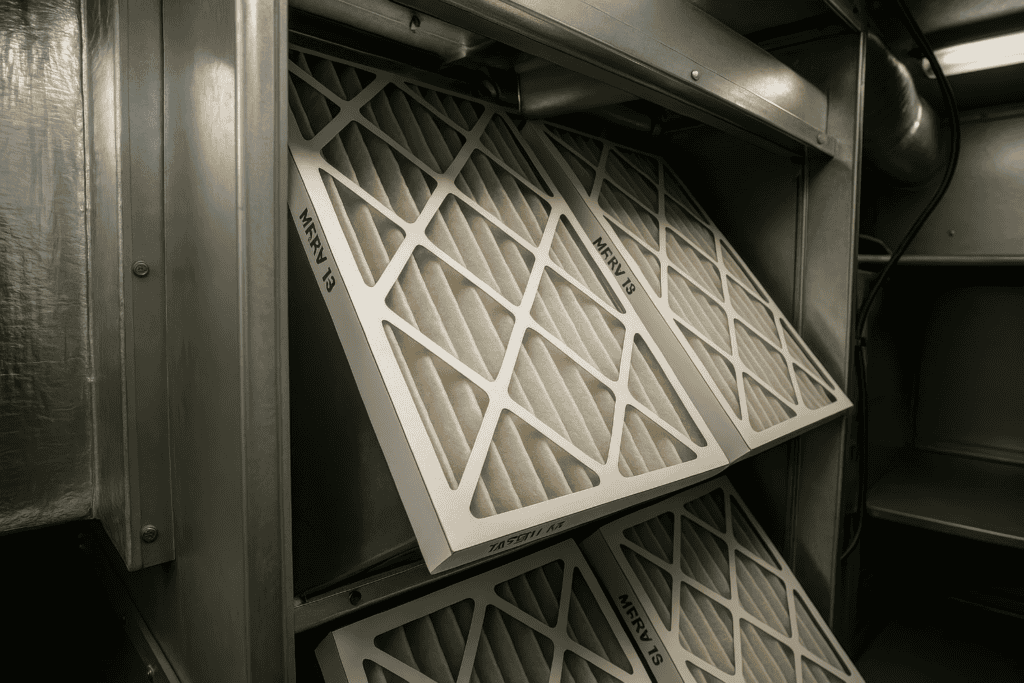
Inspect your furnace filter monthly during peak heating season to ensure clear airflow. Standard pleated filters catch larger pet hair and carpet lint, but higher-rated media filters capture finer debris, including soot and seasonal dander. Replacing a soiled filter takes minutes and immediately relieves pressure on the blower motor while keeping dust out of circulation.
Advanced Whole-Home Filtration Solutions
Portable air cleaners assist individual bedrooms, but a whole-home air filtration system works alongside your existing ductwork to purify the air in every room simultaneously. These systems remove smaller airborne particles before they reach supply registers. Pairing reliable filtration with balanced mechanical air ventilation, such as an energy recovery ventilator, supplies fresh outdoor air without throwing away precious indoor heat.
Scheduling Professional Heating and Duct Maintenance
Dust and combustion byproducts accumulate inside equipment cabinets and duct runs over months of non-stop operation. Addressing these hidden build-ups prevents contaminants from blowing into living spaces whenever the thermostat calls for heat.
Comprehensive Heating Checkups
Schedule a thorough heating maintenance visit before winter reaches its peak. A technician inspects burners, tests safety switches, checks heat exchangers for cracks, and cleans the blower assembly. Keeping your heating equipment properly tuned prevents incomplete combustion and carbon monoxide risks while reducing odors caused by scorched dust on heat exchangers.
Pinpointing Problem Areas with Targeted Assessments
If members of your household experience persistent morning congestion, unexplained odors, or sudden sneezing fits indoors, general cleaning might not uncover the source. Booking a dedicated indoor air quality assessment allows trained technicians to measure particulate levels, check duct cleanliness, and locate hidden sources of irritation. Following proven indoor air quality tips for closed-up winter homes ensures your heating setup supports both warmth and clean breathing.
Keeping warm during chilly northern winters does not mean sacrificing the quality of the air your family breathes. Managing relative humidity, changing air filters on schedule, and ensuring heating components remain clean prevent common winter pollutants from accumulating indoors. Implementing these indoor air quality tips for closed-up winter homes provides a practical blueprint for keeping your home healthy, comfortable, and safe through every freeze.
Schedule Your Indoor Air Quality Assessment with Jones Services
Ensure your home stays fresh and clean this winter with professional guidance from licensed technicians. Jones Services has served homeowners across the Hudson Valley since 1986, providing honest recommendations and upfront pricing for every project. Contact Jones Services today to schedule your air assessment or system checkup.